Cat scratcher types compared: boards, posts and trees
Cats use scratcher types differently: horizontal boards catch the carpet scratchers, vertical posts serve the couch-corner and doorframe scratchers, and a tree combines scratching with climbing and lookout duty. Read where your cat already scratches, match the type to it, and most homes end up wanting one of each.
At a glance
| Product | Best for | Price | Warranty |
|---|---|---|---|
| Magic Organ Foldable Cat Scratcher Board | Real supplier stock — ships in 8–15 days | € 13.95 | 2 years |
| Multi-Storey Cat Tree Tower with Scratch Posts | Real supplier stock — ships in 8–15 days | € 108.95 | 2 years |
| Wobble Ball Cat Scratcher on Stand | Real supplier stock — ships in 8–15 days | € 12.95 | 2 years |
Start with the damage report
Your cat has already told you which scratcher to buy; the message is written on your furniture. Shredded couch corners, doorframes and wallpaper at shoulder height mean a vertical scratcher, tall and utterly stable. Frayed carpet, doormats and rug edges mean a horizontal one, flat on the floor. Both patterns in one home mean both types, which is common: many cats stretch tall after waking and rake the floor after meals. Matching the plane of the scratch is the single highest-value decision, ahead of material, brand or price. A cat with a vertical habit will not walk to a flat board in another room out of politeness, and no amount of catnip fixes a scratcher of the wrong orientation in the wrong place.
Horizontal boards: cheap, movable, replaceable
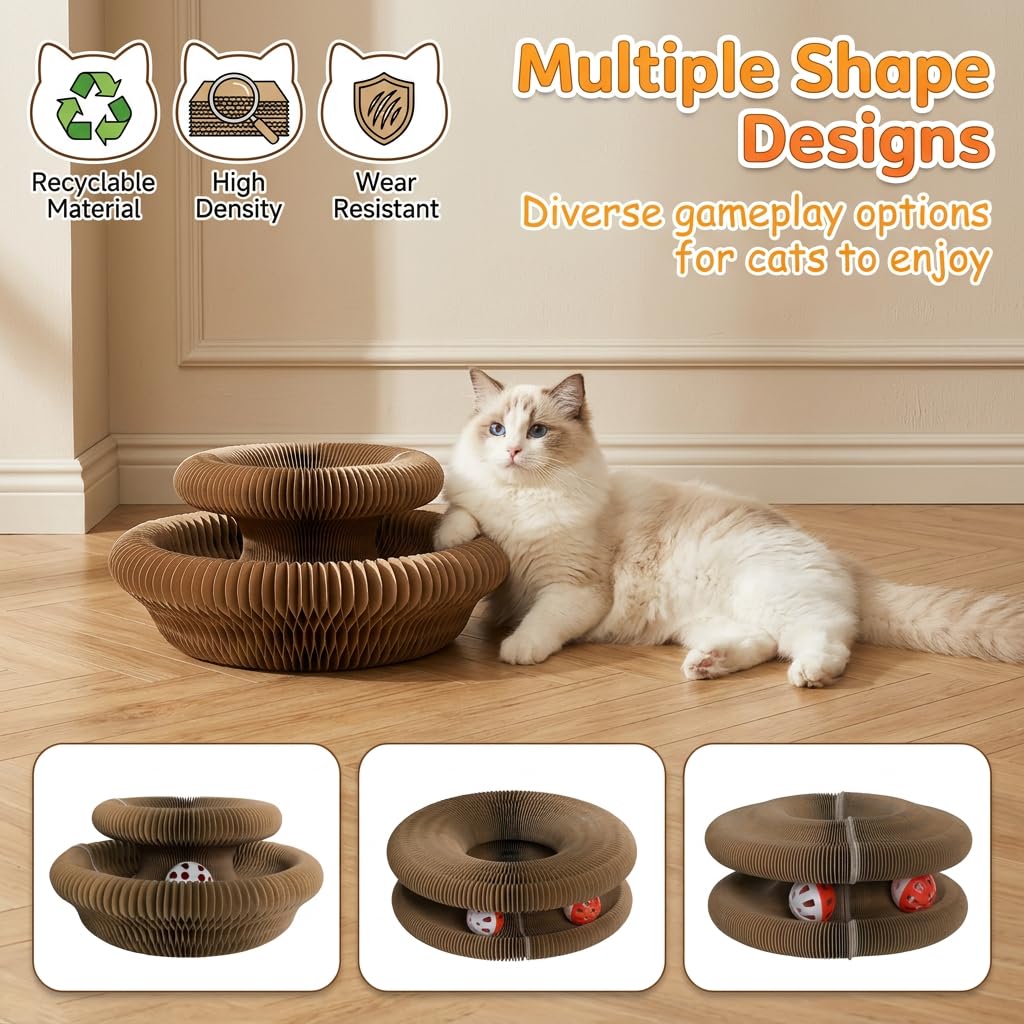
Flat and angled boards, usually corrugated cardboard, are the workhorses of scratch management. They are light enough to put exactly where the scratching already happens, cheap enough to own several, and cats love the shreddable texture precisely because it is destructible; visible damage is rather the point of scent marking. When a board is scratched through, you replace it without ceremony. Foldable designs earn their keep during the redirection phase, when the board needs to sit right next to the couch corner it is defending and later migrate, half a metre at a time, to wherever you prefer. The Magic Organ scratcher board folds and moves exactly this way, which is why a foldable board is the standard first purchase for a furniture-scratching problem.
Vertical posts and trees: the full stretch
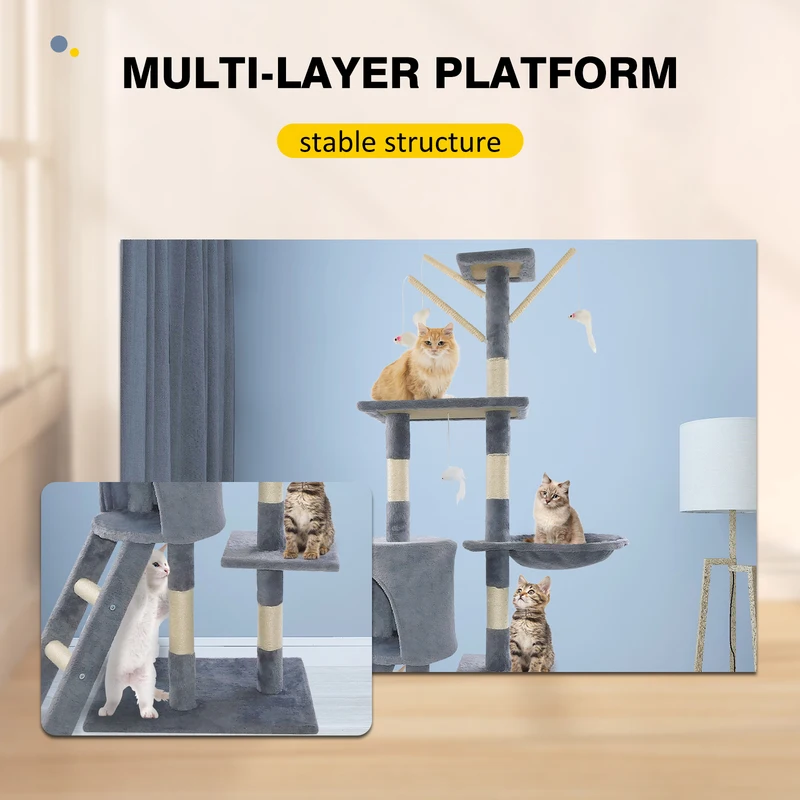
A vertical scratcher has one non-negotiable requirement: it must let the cat stretch to full body length and pull with real force without the post moving. That is why flimsy standalone poles get abandoned and why the scratch posts built into a decent cat tree are usually the best vertical surfaces in the house; the tree's own weight makes them immovable, and the cat is up there anyway. If your cat works the couch corners and doorframes, this is the type to invest in, placed near the scene of the crime or by the main sleeping spot for the wake-up stretch. The Multi-Storey Cat Tree wraps its support posts in sisal, so the route up doubles as the scratching outlet, one object solving two demands.
Combination scratchers: for the bored scratcher
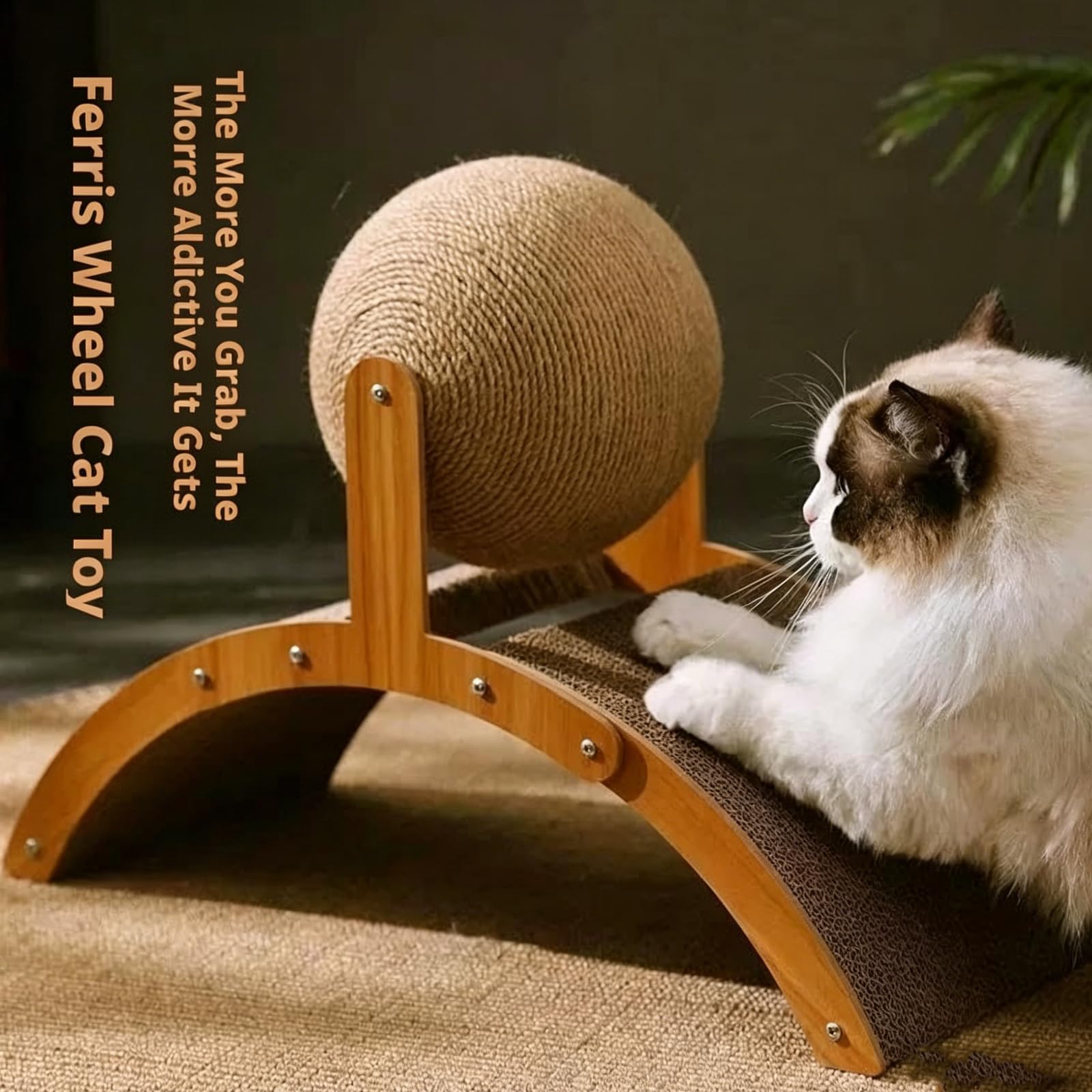
Some cats scratch mostly out of instinct, others largely out of boredom, and young indoor cats are usually both. Combination pieces that pair a scratch surface with a play element serve that second group well, because the scratching spot becomes a place where something happens rather than a lonely obligation in a corner. The Wobble Ball Scratcher is this idea in one object: a scratch surface with a batting ball on a stand, so a passing cat stops for a swipe, stays for a scratch and leaves the sofa alone. For multi-cat homes, a play scratcher also gives the junior cat something legal to ambush that is not the senior cat's tail.
Materials, quantity and when to replace
Sisal rope and sisal fabric are the standard for vertical posts: rough, durable and satisfying to rake. Corrugated cardboard dominates horizontal boards: soft, shreddable and cheap to replace. Carpet-covered posts are the weakest choice, partly because they wear out fast and partly because they teach a cat that carpet texture is for scratching, a lesson your stairs will pay for. How many does a home need? One per favourite scratching zone, plus one per cat in multi-cat homes, is a solid rule; in practice that means two or three for the average flat. Replace a board when it is shredded soft and a post when the sisal hangs loose, but expect a beaten-up look long before that. A tattered scratcher is not failing; it is working.
FAQ
Are cardboard scratchers or sisal posts better?
Neither is better; they serve different scratching styles. Cardboard boards suit horizontal scratchers and are cheap to replace, sisal posts suit vertical scratchers and last much longer. Match the type to where your cat already scratches, and use both if the damage pattern shows both.
How many scratchers does a cat need?
One per scratching zone: typically one near the sleeping spot for the wake-up stretch, one along the main walking route or next to the threatened furniture. In multi-cat homes, add roughly one per cat so nobody has to queue. Two or three covers most flats.
When should I replace a cat scratcher?
Replace a cardboard board when it is shredded soft and no longer gives resistance, and re-wrap or replace a post when the sisal is loose or unravelling. A scruffy, obviously used scratcher is a good sign, and cats often prefer a broken-in surface to a brand-new one.