Harness vs collar: which is better for a dog that pulls?
For a dog that pulls, a harness is the better everyday choice: it spreads the force of every lunge across the chest instead of the throat, and it gives you more steering control. The collar still has a job, carrying the ID tag. Here is how to decide, and how to switch.
At a glance
| Product | Best for | Price | Warranty |
|---|---|---|---|
| Outdoor Dog Harness (Small & Medium Dogs) | Real supplier stock — ships in 8–15 days | € 12.95 | 2 years |
| Dog-Walking Pouch with Poop-Bag Holder | Real supplier stock — ships in 8–15 days | € 12.95 | 2 years |
The short answer, then the long one
If your dog hits the end of the leash hard or often, walk on a harness. A collar concentrates all of that force on a few centimetres of throat, and the throat is simply not built to be a brake. A harness lays the same force across the breastbone and ribcage, where the body carries load comfortably, and it moves your point of control from the neck to the chest, close to the dog's centre of mass. That is the whole argument, and for most pullers it is decisive. The longer answer is about the exceptions: calm dogs that walk on a loose leash do fine on a flat collar, and every dog should wear a collar anyway for the ID tag. The choice is not collar or harness. It is which one the leash clips to.
What a collar does well, and where it fails
A collar is light, quick to put on, and the natural home for identification. For a leash-trained dog that never loads it, a flat collar is perfectly fine, and plenty of dogs go their whole lives on one without an issue. The failure mode is repetition. One tug on a collar is a moment; the same tug repeated hundreds of times per walk, every walk, lands on the trachea, the soft tissue of the neck and the small joints behind the skull. Trainers see the pattern constantly: the dog coughs or gags at the end of the leash, the walker compensates by holding the leash shorter, and the pulling gets worse because the dog now has constant pressure to lean into. Nothing about that loop teaches loose-leash walking.
What a harness changes
A well fitted Y-front harness leaves the throat completely out of the conversation. Force lands on the breastbone, the straps sit clear of the armpits, and the shoulders stay free to move through a full stride. You also gain a practical handle on the dog's whole body: steering a chest is easier than steering a neck, especially for a strong dog in a distracting street. Fit decides everything, so measure before you buy: chest girth just behind the front legs, neck at its base, two fingers of slack under every strap. The Outdoor Dog Harness adjusts at both neck and chest, which is exactly what you want for a dog between sizes or still growing. A harness that slips or chafes gets abandoned within a week, and then no one wins.
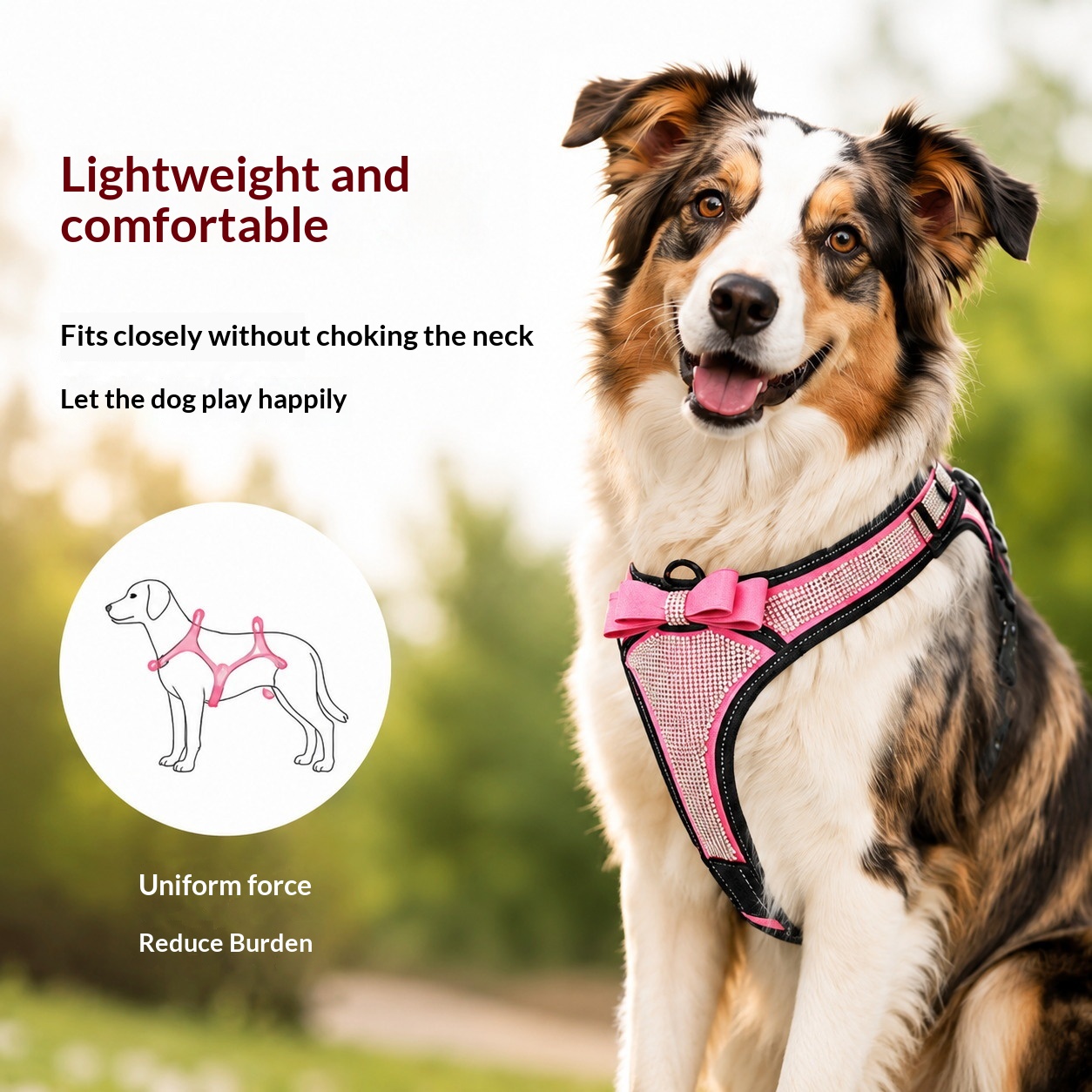
Front clip or back clip: where the leash goes matters
A back-clip harness is the comfortable default for everyday walks: the leash stays out of the front legs and nothing tangles. Its weakness is physics. A determined puller can lean into a back clip like a sled dog, which is why a back-clip harness alone sometimes feels like it made pulling easier. A front clip on the chest changes the geometry: when the dog surges ahead, the leash gently turns the shoulders sideways instead of letting the dog load up in a straight line. It is a training aid, not magic, and it works best while you actively reward walking at your side. Many good harnesses offer both rings, so you can train on the front clip and relax onto the back clip as the loose leash becomes a habit.
Making the switch without a fight
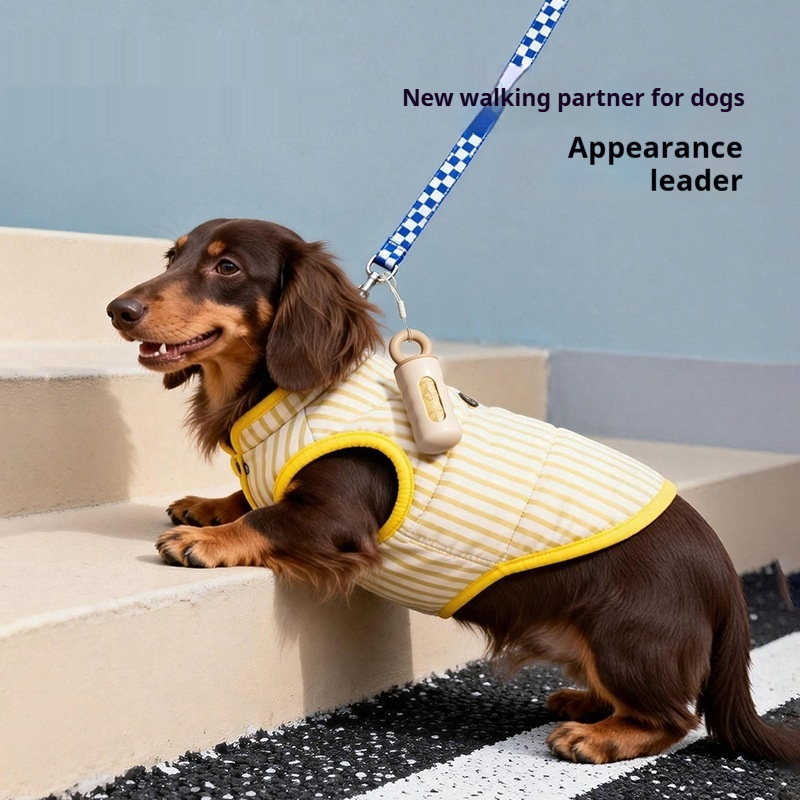
Some dogs treat a new harness with suspicion, so introduce it like anything new: let the dog sniff it, reward calm interest, feed a treat through the neck opening, and build up to wearing it around the house before the first walk. A pouch of high-value treats on your hip makes this fast, because timing is everything and coat pockets are slow. Keep the collar on for the ID tag, clip the leash to the harness, and treat the first few harness walks as training walks: short, generous and unhurried. Most dogs make the switch in days. If yours suddenly hates a harness it used to accept, check for chafing or a strap sitting badly before assuming stubbornness.
FAQ
Is a collar bad for dogs?
Not by itself. A flat collar is fine for carrying an ID tag and for dogs that walk on a loose leash. It becomes a problem when a pulling dog loads it repeatedly, because all that force lands on the throat. For pullers, clip the leash to a harness and let the collar just carry the tag.
Should my dog wear a collar and a harness at the same time?
Yes, that is the standard setup: the collar carries identification at all times, and the harness takes the leash on walks. They solve different problems and do not interfere with each other when both fit properly.
Will a no-pull harness stop my dog pulling by itself?
No. A front-clip harness changes the geometry so pulling stops being rewarding, which buys you control while you train. Pair it with rewarding the position you want, next to your leg, and the pulling fades. Gear manages the problem; training solves it.