How to play with your cat without getting bitten
Play with a toy at a distance, never with your hands, in two or three short daily sessions that move like prey: skitter, hide, freeze, dart. Let your cat catch the toy often, and end with a final catch and a treat. That single routine prevents most play biting and ankle ambushes.
At a glance
| Product | Best for | Price | Warranty |
|---|---|---|---|
| Kitty Kurls Magnetic Scratcher Toy (2-Pack) | Real supplier stock — ships in 8–15 days | € 14.95 | 2 years |
| Wobble Ball Cat Scratcher on Stand | Real supplier stock — ships in 8–15 days | € 12.95 | 2 years |
Hands are never toys
Almost every adult cat that bites hands in play learned the game as a kitten, when wiggling fingers were funny and the teeth were small. The cat never changed the game; the teeth changed. The rule that fixes it costs nothing: hands, feet and sleeves are never play objects, not even once, from every person in the household. When a cat does grab your hand, go still and boring; pulling away sharply reads as prey escaping and triggers a stronger grip. Then redirect the energy to a legal target, a wand or a kicker toy, and pay attention to what started the pounce. A cat that ambushes ankles at the same time daily is not broken; it is on schedule and underemployed.
Move the toy like prey, not like a metronome
Cats are ambush hunters wired for stalking and short explosive bursts, and toys become fascinating exactly when they behave like something alive. Drag a wand toy along the floor and around corners, let it hide behind furniture, freeze it for long seconds, then let it dart away. The freeze is the trigger; watch the pupils widen and the hindquarters load, and give the cat the pounce. Waving a toy in circles in open air teaches only frustration, because nothing real moves like that. Ground-based, irregular, sometimes-hidden movement is the pattern. And let the cat win often: a catch, a bite, a satisfying kick. A cat that never catches anything concludes the game is rigged and stops playing.
Short sessions, and toys for the empty hours
Two or three sessions of five to ten minutes beat one long marathon, because real hunts are short and cats are built for sprints, not shifts. End each session with a final catch followed by a small treat: hunt, catch, eat is the natural sequence, and closing the loop leaves the cat satisfied instead of wired. For the hours you are out, leave toys that do something. The Kitty Kurls magnetic scratcher toys give a solo cat a target that fights back a little, and the Wobble Ball Scratcher pairs a batting ball with a scratch surface so the energy lands somewhere legal. Rotate whatever lives on the floor weekly; a permanent toy stops being prey and becomes landscape.
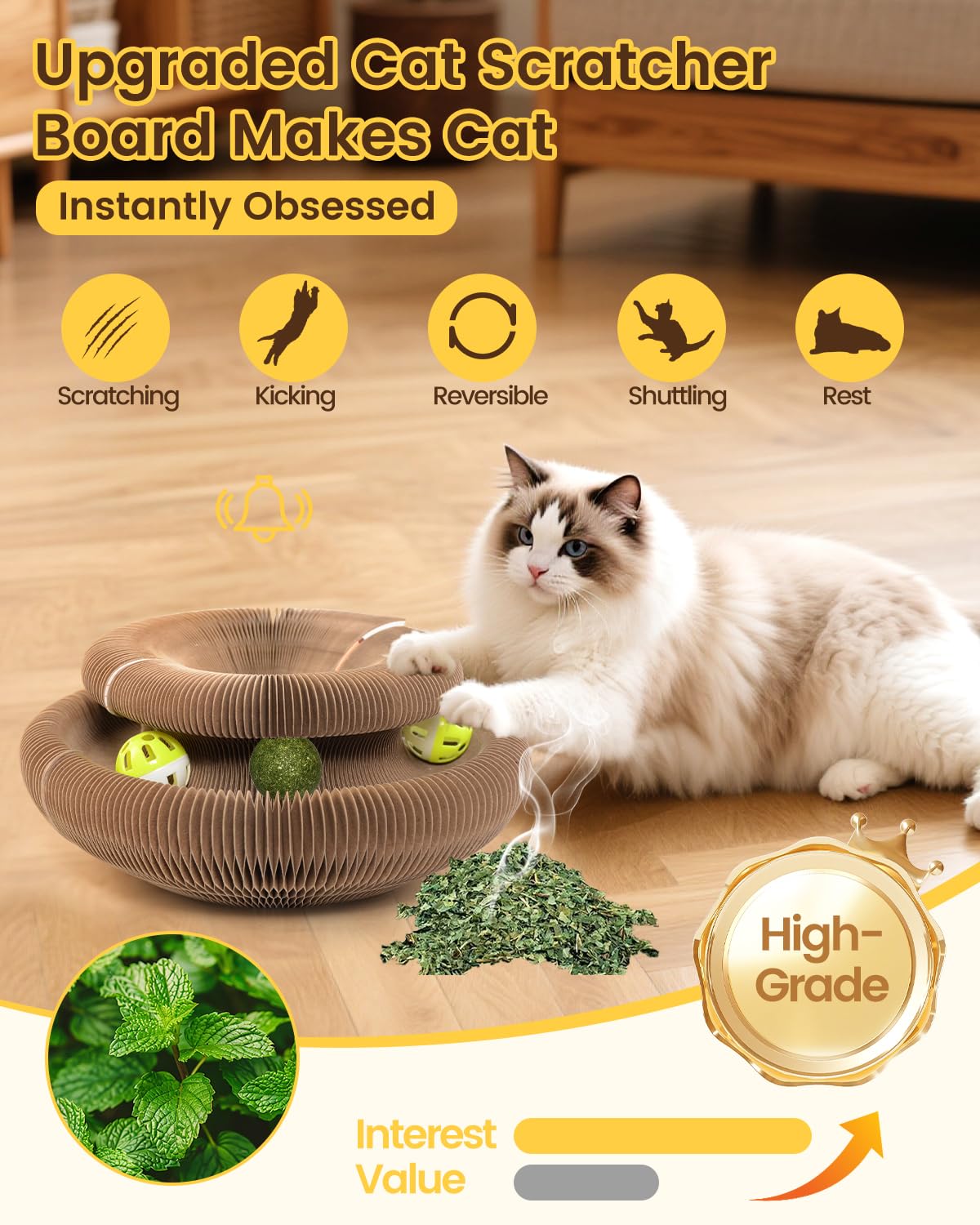
Kitty Kurls Magnetic Scratcher Toy (2-Pack)
Real supplier stock — ships in 8–15 days
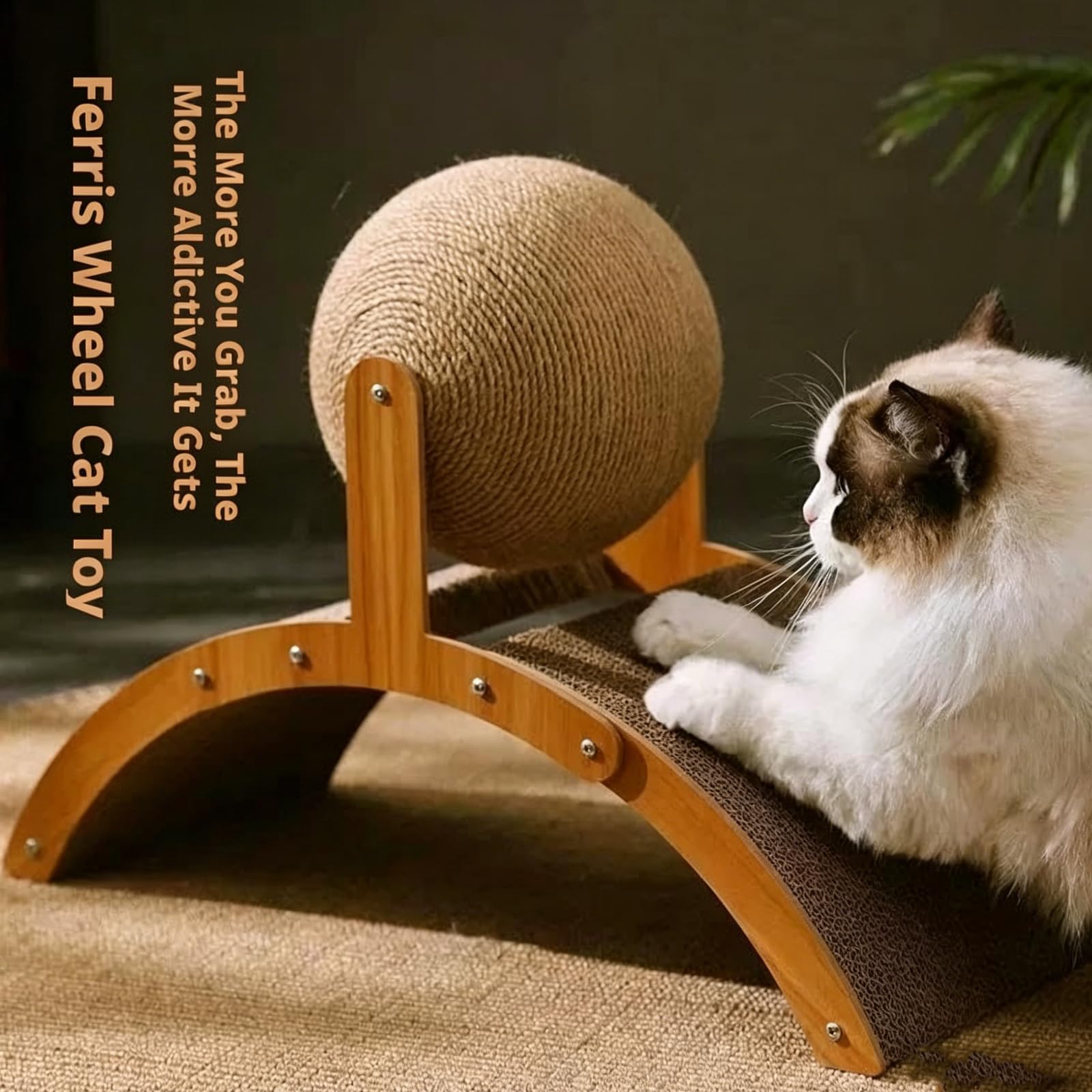
Wobble Ball Cat Scratcher on Stand
Real supplier stock — ships in 8–15 days
Read the signals before the teeth
Cats send warnings before most bites; the trick is knowing the alphabet. A twitching tail tip, skin rippling along the back, ears rotating flat, a stare fixed on your hand rather than the toy: these mean arousal is outrunning fun. Pause the game, let the cat reset for a few seconds, then resume at a calmer tempo or end on an easy catch. Petting-time bites follow the same grammar, usually after the human missed two or three polite requests to stop. Learn your cat's threshold and quit while you are ahead. A sudden change in play style, real aggression, or pain when touched is a different matter and worth a vet visit; this guide is general guidance, not veterinary advice.
FAQ
Why does my cat bite me during play?
Usually because hands were once allowed as toys, or because arousal climbed past fun into hunting mode. Keep hands out of games entirely, use wand toys at a distance, let the cat catch them often, and pause when you see the tail twitch and the stare harden.
How much playtime does a cat need per day?
Two or three short sessions of five to ten minutes each suit most cats better than one long one. Young indoor cats need the upper end. End every session with a caught toy and a small treat so the hunt finishes properly.
Are laser pointers bad for cats?
They are fine as a warm-up but frustrating as a whole game, because there is nothing to catch. If you use one, land the dot on a physical toy or treat at the end so the hunt closes with a real catch instead of an unsolvable red mystery.