Running with your dog: how to start safely
Most healthy adult dogs can learn to love running, but the start matters: wait until the joints have matured, ask your vet before the first session, and build distance slowly on soft ground. A hands-free leash with a shock-absorbing section makes the shared miles comfortable at both ends.
At a glance
| Product | Best for | Price | Warranty |
|---|---|---|---|
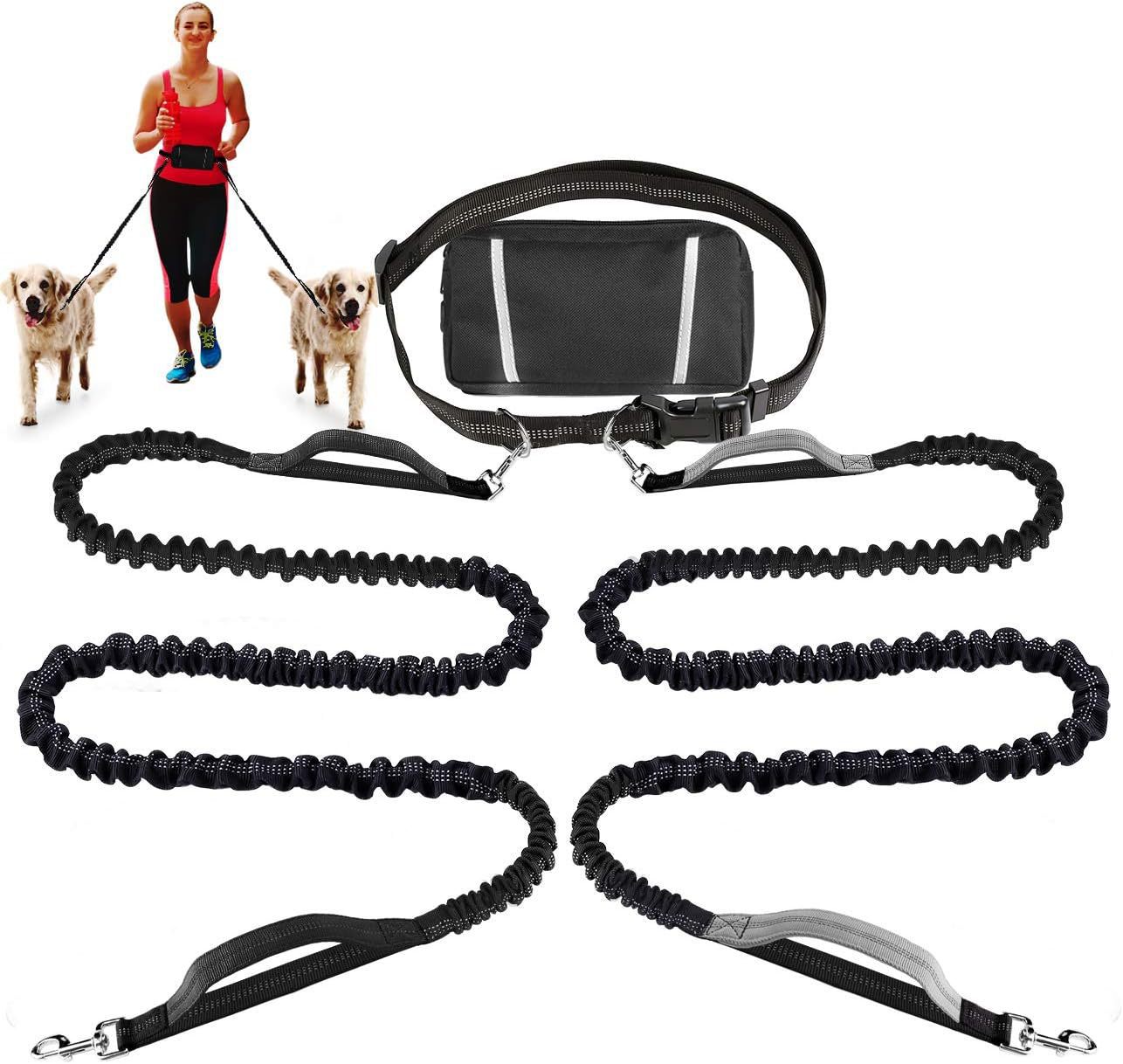
| Reflective Hands-Free Running Leash Set | Real supplier stock — ships in 8–15 days | € 12.95 | 2 years |
| Travel Pet Feeder Bowl | Real supplier stock — ships in 8–15 days | € 15.95 | 2 years |
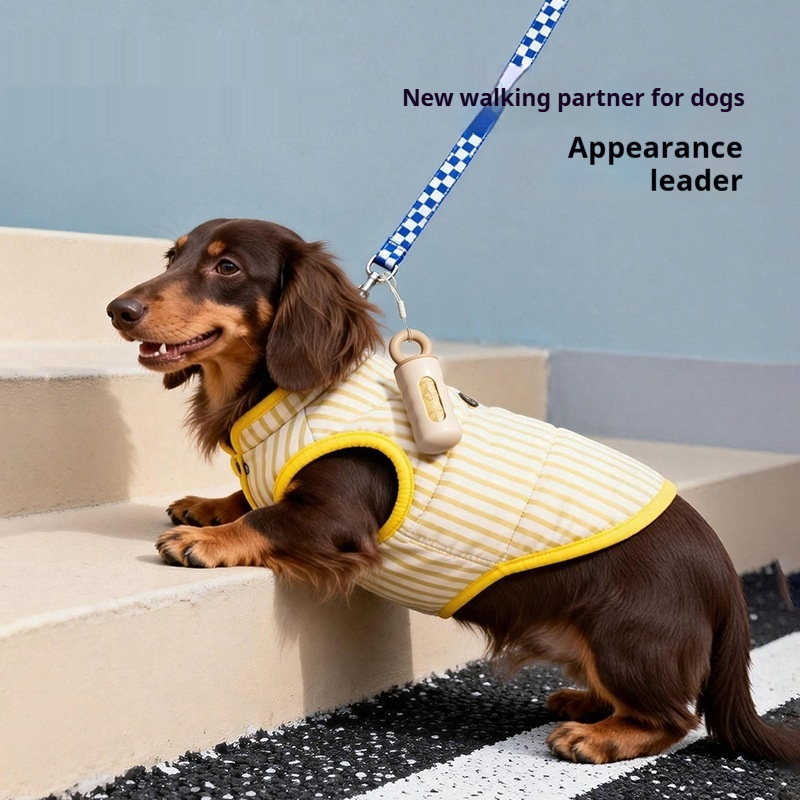
| Dog-Walking Pouch with Poop-Bag Holder | Real supplier stock — ships in 8–15 days | € 12.95 | 2 years |
Is your dog ready to run?
Age comes first. A dog's growth plates need to close before it runs distance on a leash, and that happens somewhere past the first year, later for large breeds. Running a puppy on pavement trades a few fun months now for joint trouble later, so give young dogs their zoomies off-leash on grass and save the structured kilometres for adulthood. Build matters too. Long-nosed, athletic breeds tend to take to running easily, while flat-faced breeds struggle to move enough air to cool themselves and are poor candidates for distance running in any warm weather. Weight, age and old injuries all change the equation, which is why the honest first step is a quick conversation with your vet. This guide is general guidance, not veterinary advice.
The kit that makes it comfortable
Running with a leash in your hand ruins your stride and turns every squirrel into a shoulder injury. The standard fix is a waist belt with a bungee leash: the belt keeps your arms free, and the elastic section absorbs the small shocks of a dog changing pace, so neither of you gets yanked. Clip it to a well fitted harness, never a collar, because a running dog hitting the end of a leash needs that force on its chest. The Reflective Hands-Free Running Leash Set covers the whole setup in one go: waist belt, shock-absorbing lead and reflective stitching for the early-morning and late-evening hours when summer running actually happens. Check the harness fit before every run; a strap that merely rubs on a walk will chafe properly over five kilometres.
Build distance the boring way
Dogs are enthusiasts, not planners. Yours will run further than it should, look delighted, and pay for it the next day, so the pacing discipline has to be yours. Start with a walk-run mix over a short route, keep the first weeks conservative, and add distance gradually, one variable at a time, the same way a human couch-to-5k plan does it. Watch the dog, not the app. Lagging behind, heavy panting early in the run, or lying down mid-route are signals to cut the session, not push through. Soft surfaces like forest trails and grass are kinder than asphalt while fitness builds, and rest days are as real for dogs as for people. A dog that is still stiff or flat the day after a run did too much.
Water, heat and paws
A running dog cools almost entirely by panting, which costs water, so bring some on any run beyond the short and cool. A collapsible bowl or travel feeder that flattens into a pocket means a proper drink at the halfway point instead of hopeful licking at puddles. The Travel Pet Feeder folds flat and lives happily in a running belt or backpack. Heat deserves respect: shift summer runs to early morning, test pavement with the back of your hand before setting out, and default to shade and grass when the day warms up. Afterwards, glance at the paws. Pads handle honest distance well, but they wear like any material, and a dog that licks its feet after a run is telling you to check them.
Trail manners are part of the training
A running dog is still a dog in public: it needs a reliable response to its name, a pass-politely habit around other runners and dogs, and a human who carries bags. Keep a few treats and the bags in a pouch on the belt so rewards and clean-ups do not interrupt the rhythm of the run. Teach a couple of simple running cues early, a word for slowing and a word for switching sides, and pay them well. They turn junctions, cyclists and narrow paths from small emergencies into routine. The payoff for a season of patient training is years of the best running partner you will ever have: always free, always keen, never checks its phone.
FAQ
At what age can my dog start running with me?
After the growth plates have closed, which is typically somewhere past 12 to 18 months depending on breed and size, later for large breeds. Ask your vet before the first structured run. Puppies should get their exercise as free play on soft ground instead.
How far can a dog run?
It depends on breed, fitness, weather and age, so build up the same way humans do: start with a short walk-run mix and add distance gradually while watching how the dog recovers. Many fit medium-sized dogs eventually handle 5 to 10 km comfortably in cool weather, but the dog in front of you sets the number.
Is a hands-free leash safe?
Yes, with the right setup: a waist belt, a bungee section to absorb surges, and the leash clipped to a well fitted harness rather than a collar. Keep the dog on the side away from traffic and teach simple cues for slowing and turning.