How to stop your dog pulling on the leash
You stop leash pulling by making pulling useless and a loose leash rewarding: stand still the moment the leash tightens, pay generously when your dog is at your side, and repeat for a few weeks. Gear cannot train the dog, but a well fitted harness and a treat pouch make the training stick.
At a glance
| Product | Best for | Price | Warranty |
|---|---|---|---|
| Outdoor Dog Harness (Small & Medium Dogs) | Real supplier stock — ships in 8–15 days | € 12.95 | 2 years |
| Dog-Walking Pouch with Poop-Bag Holder | Real supplier stock — ships in 8–15 days | € 12.95 | 2 years |
Why dogs pull: because it works
Dogs pull for one simple reason: pulling gets them where they want to go. Every step you take while the leash is tight teaches the dog that tension moves the walk forward. No breed is born a puller and no dog pulls out of dominance; it is just a habit that has been paid, walk after walk, since puppyhood. That framing is good news, because habits built by reward can be rebuilt by reward. The plan has two halves: pulling stops working, and walking beside you starts paying better than anything else on the street. Everything below is a version of those two rules.
Step one: stop the rehearsal
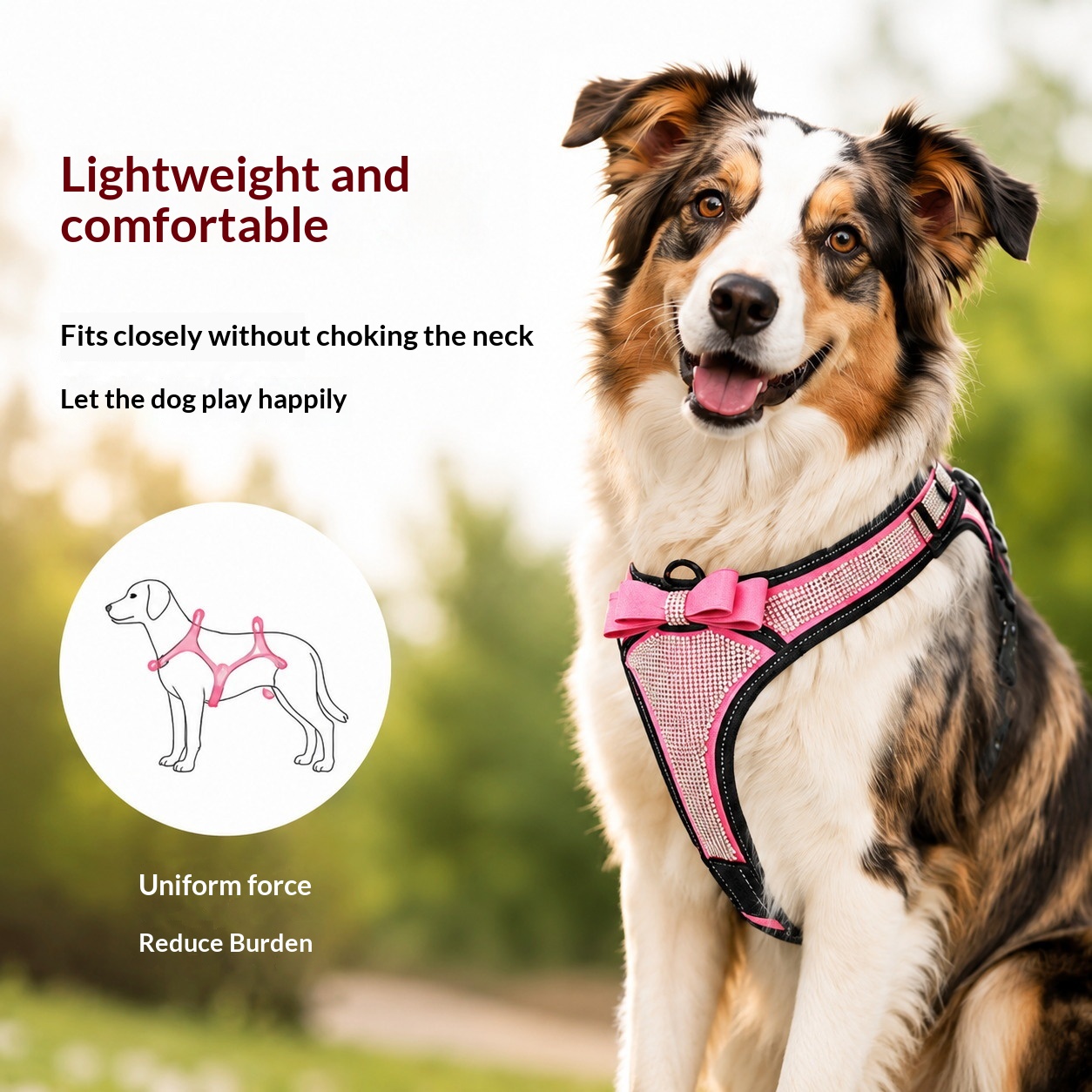
From today, a tight leash means the walk pauses. Stop walking the instant the leash loads, stand quietly, and wait. The moment the leash slackens, even because the dog glanced back, walk on. You are not punishing anything; you are making tension boring and slack productive. Expect the first few walks to be slow and slightly ridiculous. That is the method working. Move the leash to a harness while you train. It keeps the inevitable tightening off the throat, and a front-clip ring turns a hard surge gently sideways instead of letting the dog lean in. The Outdoor Dog Harness has the adjustable fit that keeps this comfortable over weeks of practice.
Step two: pay the position you want
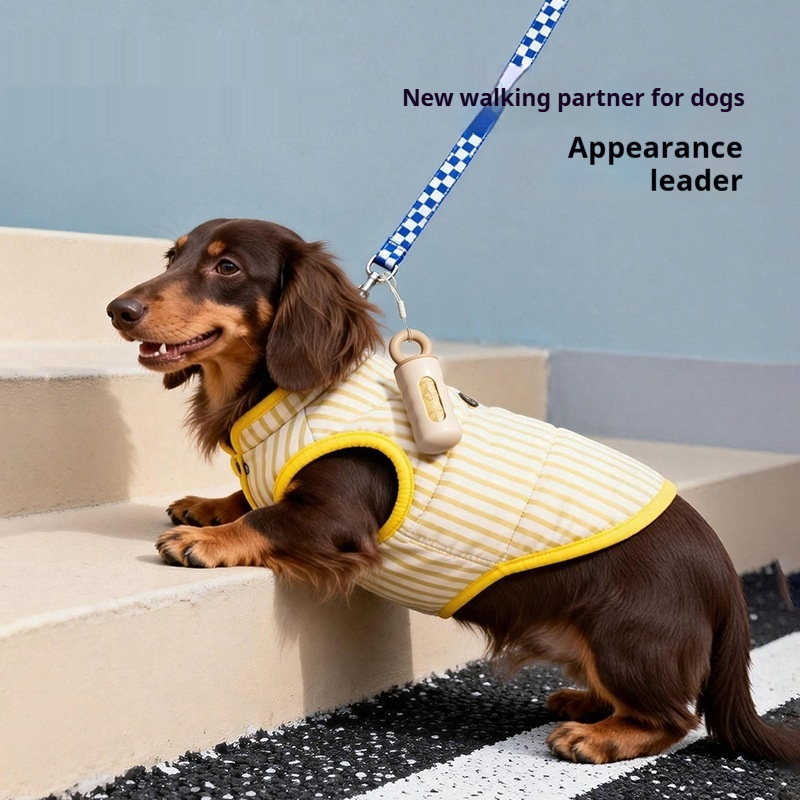
Standing still only removes the reward for pulling. Now add the reward for the alternative: every time your dog is beside your leg on a loose leash, mark it with a word and pay it with a treat delivered low, right at your seam. Early on, that can mean a treat every few steps. You are buying a habit; be generous until it exists, then pay less often. This is where a treat pouch earns its place. Rewards have to arrive within a second or two of the behaviour, and no coat pocket is that fast. The Dog-Walking Pouch keeps the pay-out on your hip and the poop bags in the same place, so every walk is a training walk without any extra effort.
Step three: let the walk breathe
A dog that has been straining toward every lamppost is usually a dog that never gets to be a dog. Build sniffing time into the walk on purpose: pick a cue like go sniff, release the dog to a patch of grass, and let it read the neighbourhood news for a minute. Sniffing is mentally tiring in the best way, and a dog whose needs are met has far less reason to drag you toward the next smell. Structure helps too. A consistent pattern, calm exits through the door, the same reward position, the same rules every walk from every family member, teaches faster than any single trick. Dogs are superb at reading rules that never change and terrible at reading rules that depend on who holds the leash.
What to avoid
Skip anything that works by discomfort: choke chains, prong collars and leash jerks suppress the symptom while making the walk more stressful, and stress is fuel for pulling. Skip retractable leads during training as well; they pay the dog with extra range for leaning into the leash, which is precisely the lesson you are trying to erase. A fixed leash of around 1.5 to 2 metres gives clear, consistent information. Be patient with setbacks. A squirrel, a doorbell of a dog behind a fence, a windy day: arousal will beat training some days, and that is normal. If pulling is paired with lunging or barking at specific triggers, that is a different problem worth taking to a qualified trainer rather than fighting alone.
FAQ
How long does it take to stop a dog pulling on the leash?
With consistent stand-still-and-reward training on every walk, most dogs show a clearly better leash within two to four weeks, and a reliable loose leash within a couple of months. Consistency matters more than talent: one family member allowing pulling resets the clock.
Does a harness make pulling worse?
No. A harness does not teach pulling; being rewarded for pulling teaches pulling. A back-clip harness does let a committed puller lean in comfortably, which is why a front-clip ring is useful during training. The harness protects the throat either way.
What length leash is best for training loose-leash walking?
A fixed leash of about 1.5 to 2 metres. It is long enough for the dog to walk naturally and short enough to give consistent feedback. Save long lines for recall practice in parks, and avoid retractable leads until the loose-leash habit is solid.