Keeping an indoor cat happy in a small apartment
A bored indoor cat sleeps too much, eats too much and scratches things you love. The fix isn't more space — it's better use of the space you have. Vertical territory, hunting games and a predictable routine cover most of what a cat needs.
At a glance
| Product | Best for | Price | Warranty |
|---|---|---|---|
| Multi-Storey Cat Tree Tower with Scratch Posts | Real supplier stock — ships in 8–15 days | € 108.95 | 2 years |
| Wobble Ball Cat Scratcher on Stand | Real supplier stock — ships in 8–15 days | € 12.95 | 2 years |
| Kitty Kurls Magnetic Scratcher Toy (2-Pack) | Real supplier stock — ships in 8–15 days | € 14.95 | 2 years |
| Magic Organ Foldable Cat Scratcher Board | Real supplier stock — ships in 8–15 days | € 13.95 | 2 years |
| Travel Pet Feeder Bowl | Real supplier stock — ships in 8–15 days | € 15.95 | 2 years |
Think vertical: floor space is not cat space
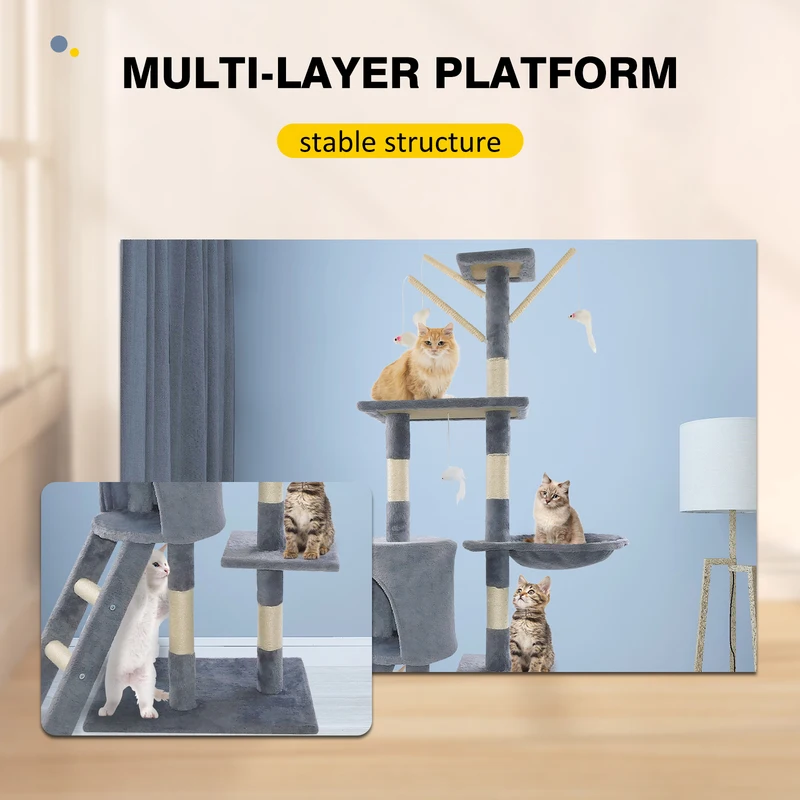
Cats measure territory in three dimensions. A studio apartment with climbing routes feels bigger to a cat than a house without them, because height is safety: an elevated perch is where a cat relaxes enough to properly rest. If your cat naps on top of the wardrobe, that's not mischief — it's instinct asking for a better option. One solid cat tree placed by a window does more than any floor toy: perch, lookout, scratch post and refuge in a single footprint of floor. The Multi-Storey Cat Tree gives climbing levels plus scratch posts — pick a window with street or bird view and you've built cat television.
Play like prey, ten minutes twice a day
Cats are ambush hunters built for short, intense bursts — not marathon fetch. Two or three sessions of ten minutes beat an hour of half-hearted dangling. Move toys like prey: skitter along the floor, hide behind furniture, freeze, dart. Let the cat catch and 'kill' the toy regularly, and end sessions with the catch followed by a small treat — hunt, catch, eat, groom, sleep is the natural sequence you're recreating. Rotate toys weekly; a toy that lives on the floor permanently becomes furniture. Interactive pieces like the Wobble Ball or Kitty Kurls work solo hours too — good for the stretch of day when you're at work.
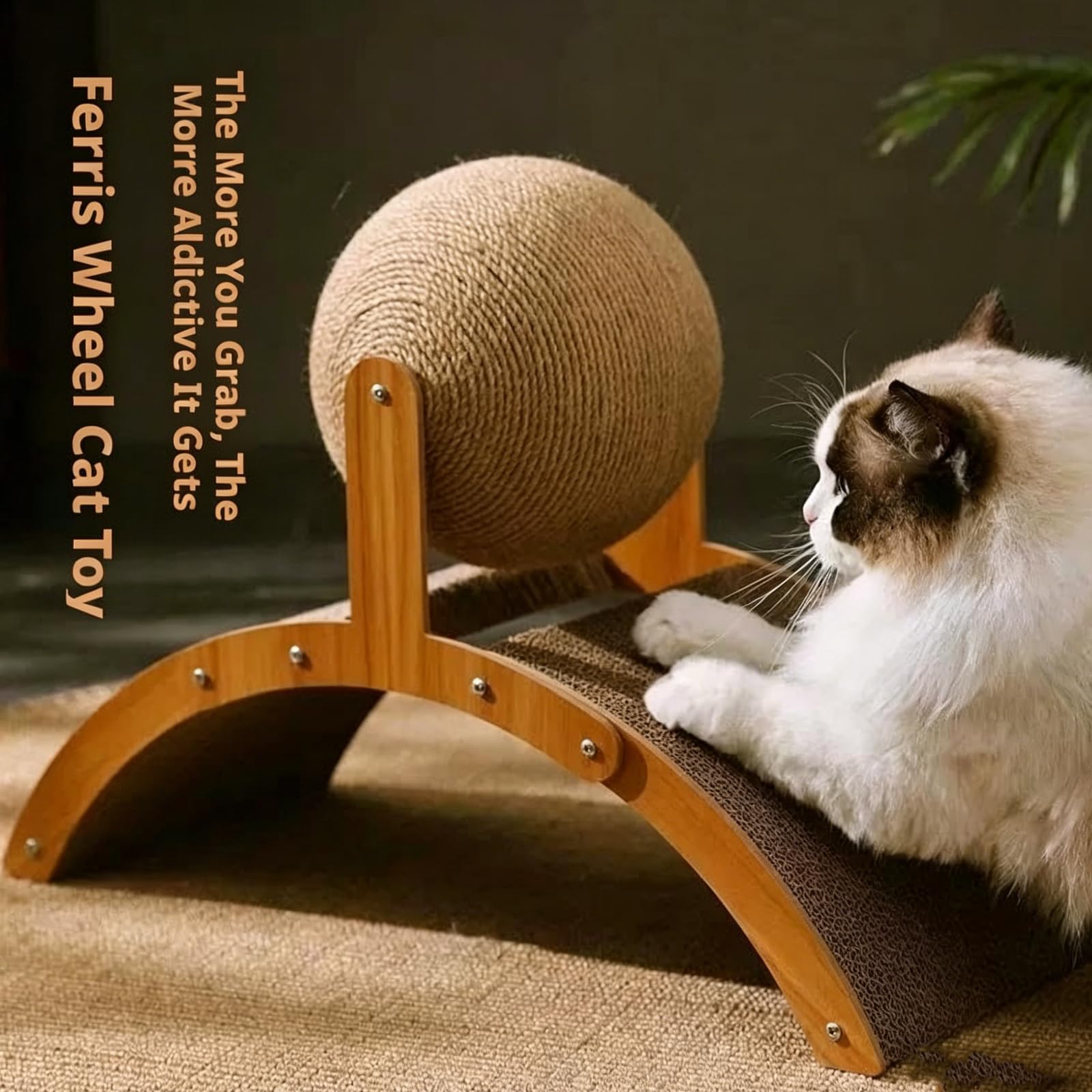
Wobble Ball Cat Scratcher on Stand
Real supplier stock — ships in 8–15 days
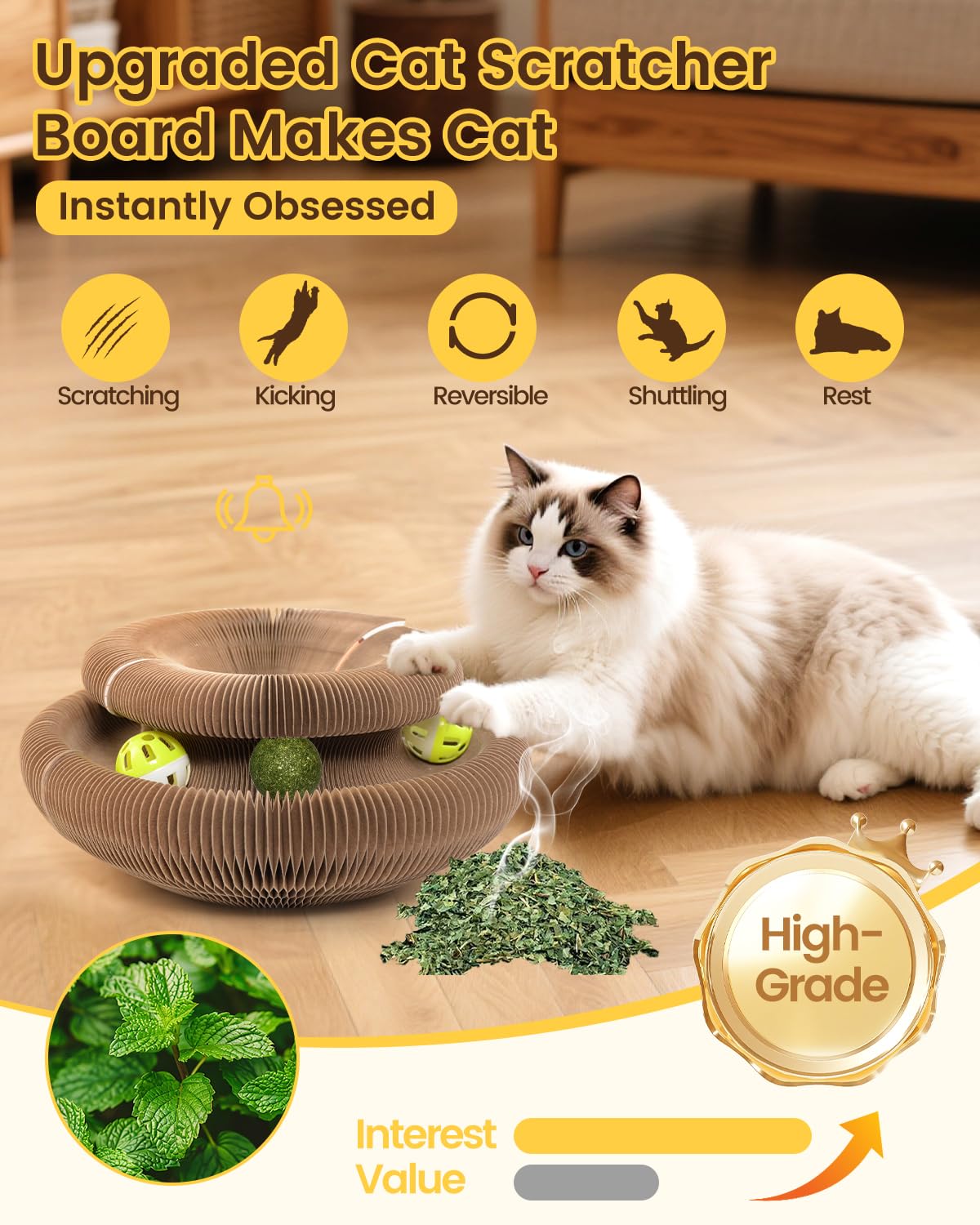
Kitty Kurls Magnetic Scratcher Toy (2-Pack)
Real supplier stock — ships in 8–15 days
Scratch spots are enrichment, not damage control
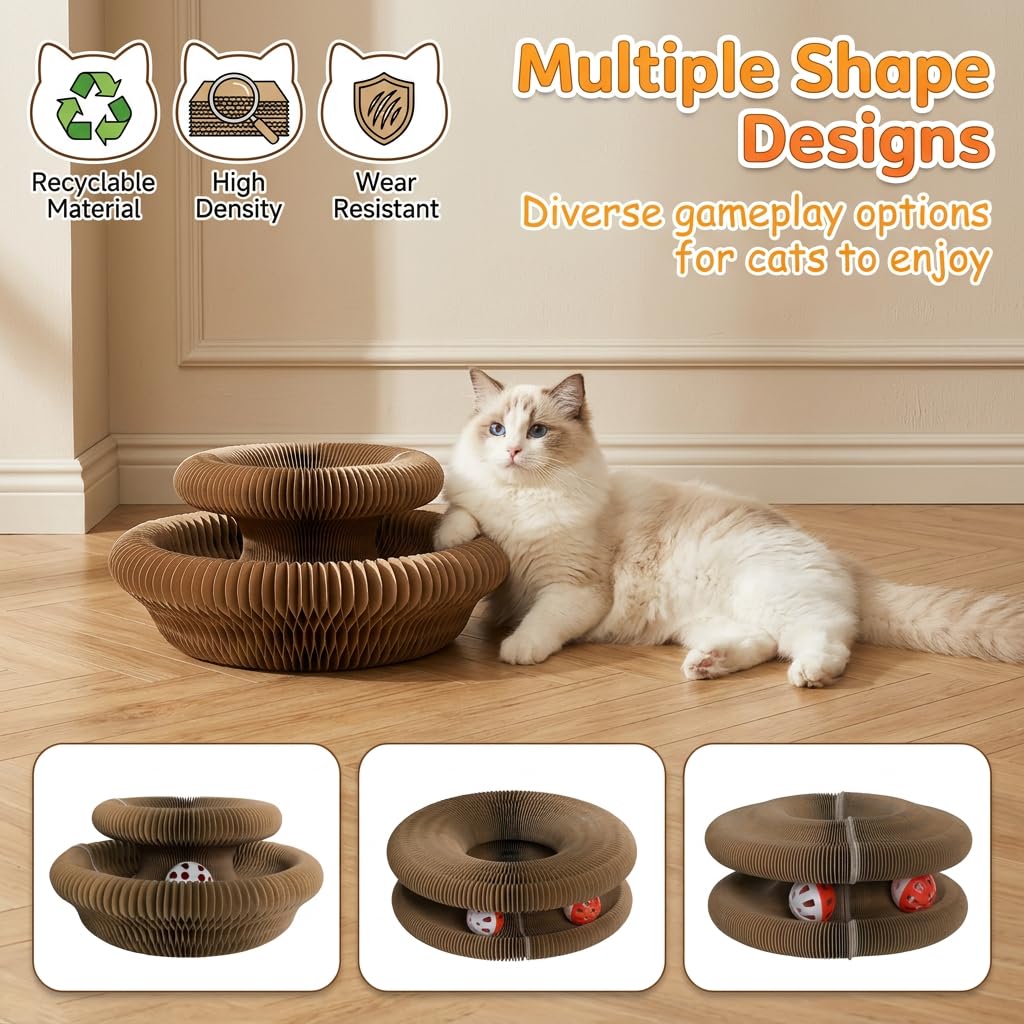
In a small home, scratch surfaces do double duty: they protect your furniture and they're one of the few outlets a cat fully controls. Spread two or three around — one by the sleeping spot for the wake-up stretch, one along the main walking route, one near the couch it would otherwise choose. Foldable boards tuck against a wall when guests come. Variety matters more than quantity: one vertical, one horizontal covers both scratching styles, and most cats use both depending on mood.
Routine, feeding games and window safety
Indoor cats thrive on predictability: feed, play and clean the litter tray at roughly the same times daily and much 'random' misbehaviour evaporates. Turn at least one meal into work — scatter kibble, use a puzzle feeder, or hide portions around the flat. A cat that hunts its food is a calmer cat. Two safety notes for flats: secure tilt-windows (a cat can get fatally stuck in the tilt gap — window guards are cheap) and balconies need netting before they're cat territory. And if you travel or move around a lot, a familiar travel feeder smooths the disruption — same bowl, same ritual, anywhere.
FAQ
Is it cruel to keep a cat indoors?
No — indoor cats routinely live longer than outdoor cats, avoiding traffic, fights and disease. The trade is that YOU become the environment: provide climbing height, daily hunting-style play, scratch outlets and routine, and an indoor cat lives a full feline life.
How much playtime does an indoor cat need?
Two or three short, intense sessions a day — around ten minutes each — beat one long one. Move toys like prey, let the cat catch them regularly, and end with a treat to complete the hunt-catch-eat cycle.
Why does my cat knock things off shelves?
Usually boredom plus attention-seeking: it moves, it makes noise, and you come running. More hunting-style play and food puzzles channel that energy; clearing precious items off cat-height shelves handles the rest.
Do indoor cats need a cat tree?
They need vertical territory — a tall perch that doubles as scratch post and lookout. A cat tree by a window is the most space-efficient way to provide it in a small apartment, but sturdy shelves can do the same job.