Dog stairs or a ramp? Choosing for bed, sofa and car
Stairs suit most small dogs at home: they take little floor space and match how dogs naturally climb onto the sofa or bed. A ramp is the better choice for long-backed breeds, stiff seniors and car boots, because it removes stepping entirely. Either one beats the daily jump.
At a glance
| Product | Best for | Price | Warranty |
|---|---|---|---|
| 3-Step Dog Stairs for Small Dogs & Cats | Real supplier stock — ships in 8–15 days | € 49.95 | 2 years |
| Waterproof Car Seat Cover for Pets | Real supplier stock — ships in 8–15 days | € 16.95 | 2 years |
Why the daily jump adds up
A jump off a bed or car sill looks effortless, but the landing loads the front legs with several times the dog's body weight, and small dogs make that landing from heights that are, in proportion, enormous. Twice a day, every day, for years: the maths is unkind, especially for puppies whose joints are still forming and seniors whose joints are wearing. You rarely see the cost until it shows up as hesitation. A dog that circles in front of the sofa, rehearses the jump twice before committing, or quietly stops sleeping on the bed is often telling you the launch or the landing has started to hurt. That reluctance is worth a vet conversation in its own right; this guide is about removing the jump, which helps either way.
The case for stairs
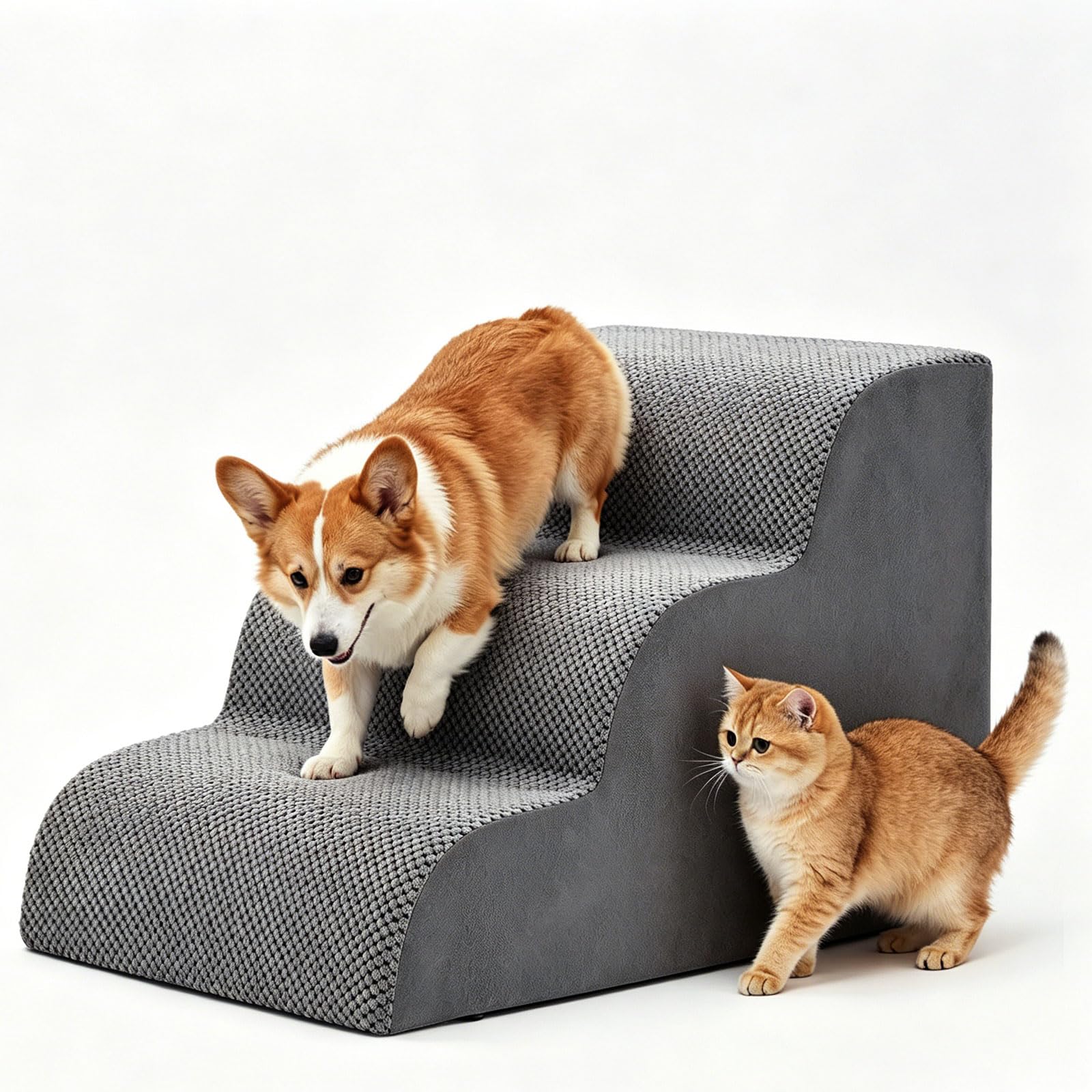
Steps are compact, stable and intuitive: most dogs understand stairs already, so training is usually a matter of a few treats. Their footprint is small enough to live permanently against the sofa or bed without redesigning the room, and a good set is wide, grippy and solid enough not to shift when a dog hits it at speed. Stairs still involve stepping, so each joint bends on the way up, just far less than a jump demands. For the typical small dog, a healthy senior, or a cat that has started thinking twice about the windowsill, that trade is exactly right. The 3-Step Dog Stairs cover the standard sofa and bed heights and stay put on the floor, which is the detail that decides whether an animal trusts them.
The case for a ramp
A ramp removes steps altogether and replaces them with a walk, which is why it is the standard advice for long-backed, short-legged breeds like dachshunds and for dogs with real stiffness: no hop, no bend, just a slope. It is also the natural answer for car boots, where the height is too much for stairs and the lift-in wrestle annoys everyone involved. The cost is space and angle. A ramp only works when it is long enough to keep the slope gentle, which makes it a bigger object to store and position than a set of steps. Too steep and the dog slides or refuses, so for tall beds and boots, longer is always better. If your dog is recovering from an injury or has a diagnosed joint condition, let your vet steer the choice; that is a medical decision, not a furniture one.
Teaching a dog to use them
Never lure a worried dog straight up the full climb. Put the stairs or ramp flat-adjacent to daily life for a day so it becomes furniture, then pay single steps: front paws on, treat, off, repeat, adding one step at a time until the dog trots the whole thing to reach a treat at the top. Most dogs get there in a handful of short sessions; hesitant ones get there with patience and better treats. Then make it the only route. Block the shortcut jump for a few weeks by placing the steps where the dog used to launch, and reward every voluntary use you see. Habits transfer fast once the new way is reliably easier than the old way.
The car question
For cars, height decides. A low back seat with a small dog can work with three steps placed square against the sill; a tall boot wants a ramp for the same reason airports use jet bridges instead of ladders. Either way, stability is non-negotiable: a wobble at the top step teaches a dog to refuse in one single lesson. While you are reorganising the car for the dog, a hammock-style seat cover keeps sand and hair off the bench and doubles as a barrier that stops the dog slipping into the footwell during braking. The Waterproof Car Seat Cover washes clean and turns the back seat into a permanent, civilised dog zone.

FAQ
Do small dogs really need stairs for the bed or sofa?
They benefit more than large dogs do: relative to body size, a small dog jumps off a cliff every time it leaves your bed. Steps or a ramp remove that repeated landing impact, which matters most for puppies, seniors and long-backed breeds.
Should a dachshund use stairs or a ramp?
A ramp, as a rule. Long-backed, short-legged breeds do better walking a gentle slope than hopping steps. Keep the angle shallow, the surface grippy, and let your vet advise if the dog already has back problems.
How do I get my dog to use the stairs instead of jumping?
Train it in small paid steps: reward front paws on the bottom step, then each step higher, until the dog climbs the whole set for a treat. Then position the stairs to block the old launch spot and reward every voluntary use for a few weeks.