How to dry a wet dog fast (and save your sofa)
Blot, don't rub: press an absorbent towel or a fitted dog bathrobe into the coat to pull water out, work from spine to legs, and give the dog a warm spot to finish drying. Ten calm minutes at the door save the sofa, the car seats and most of the wet-dog smell.
At a glance
| Product | Best for | Price | Warranty |
|---|---|---|---|
| Super-Absorbent Dog Bathrobe Towel | Real supplier stock — ships in 8–15 days | € 12.95 | 2 years |
| Waterproof Car Seat Cover for Pets | Real supplier stock — ships in 8–15 days | € 16.95 | 2 years |
Why the shake is not enough
A dog's shake is impressively engineered and genuinely removes much of the loose water, but what stays behind is the problem: moisture held deep in the undercoat. That damp layer is what makes the classic wet-dog smell linger, what soaks into sofas and car seats, and what keeps a small dog cold long after the walk. In thick-coated breeds the undercoat can stay damp for hours if nobody intervenes. So let the dog shake outside or at the door, then finish the job yourself. The order matters: the sooner you towel after the shake, the more water you catch before it wicks along the coat, and the less of the smell ever develops. A dog that gets dried in the hallway also never needs to dry itself on your cushions, which is the manoeuvre the sofa remembers.
Blot, don't rub
Vigorous rubbing feels productive but mostly moves water around, tangles longer coats into mats, and winds the dog up at exactly the moment you want calm. Pressing works better: lay the towel over the back, press down firmly so the fabric drinks water out of the coat, hold, lift, move on. Spine first, then flanks, then legs, tail and chest, and a gentle squeeze down each leg like wringing very politely. Paws deserve ten extra seconds: wet paws slide on smooth floors, and the fur between the pads holds mud and grit that dries into itchy clumps. Make the whole ritual boring and predictable, treat at the end, and most dogs learn to stand for it within a couple of weeks. The routine itself is the training.
Bathrobe vs towel: when each wins
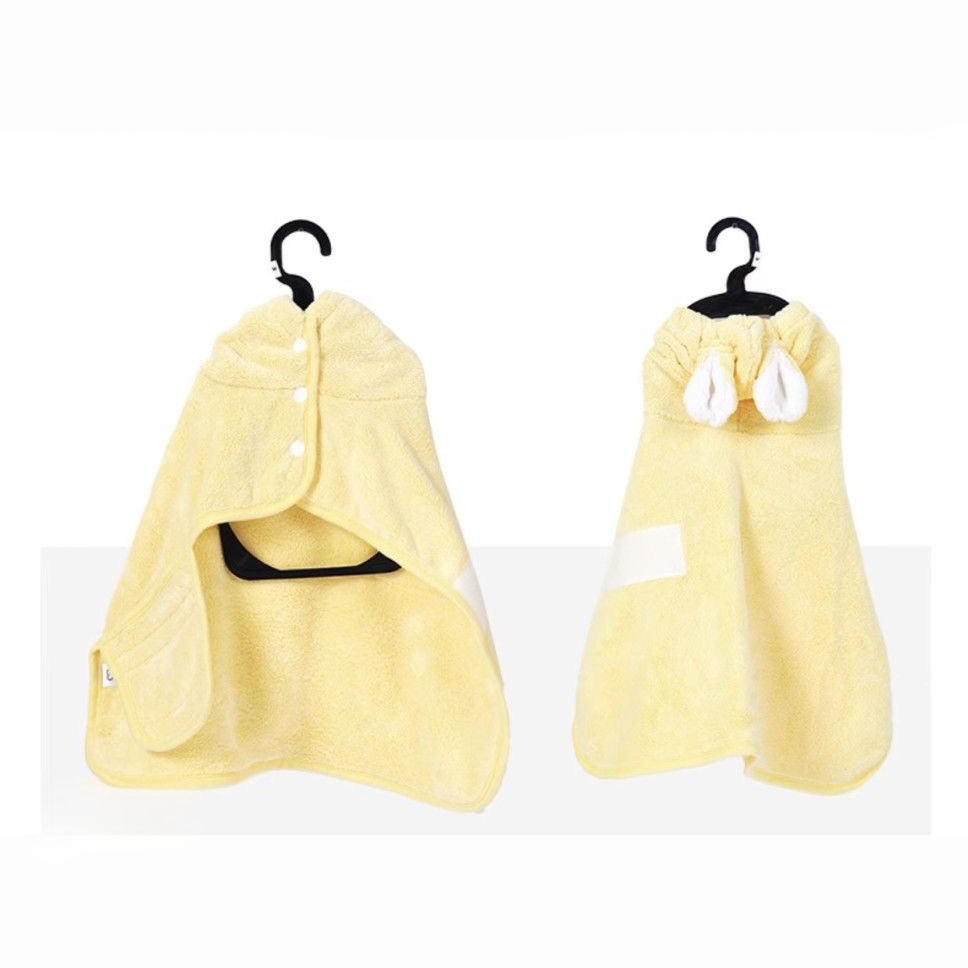
A towel is fast and fine for a lightly damp dog. A dog bathrobe wins whenever the dog is properly wet: it wraps the whole body in absorbent fabric that keeps working while you do something else, it stops the secondary shake from redecorating the hallway, and it holds warmth around a cold, wet animal instead of leaving it standing damp in a draught. The Super-Absorbent Dog Bathrobe closes with a simple wrap and lets the dog wander, lie down and be blotted by its own outfit for twenty minutes. After beach days and lake swims, rinse the coat with clean water first if you can; salt and lake residue make the coat sticky and the smell worse. Then robe, walk home, done. On genuinely cold days the warmth argument beats the convenience argument: small, thin-coated and senior dogs lose heat fast when wet, and drying them promptly is comfort, not cosmetics.
Protect the landing zones
The two surfaces that suffer most from a wet dog are the car seat and the sofa, and both are cheaper to protect than to clean. In the car, a hammock-style waterproof cover turns the back seat into a zone that shrugs off wet coat, sand and mud, and washes clean when the season's damage is done. The Waterproof Car Seat Cover clips around the headrests in a minute and simply stays there from autumn to spring. At home, give the dog a designated post-walk bed or blanket near the door and reward lying there while the coat finishes drying. A dog with a clear, comfortable wet-dog station stops improvising one on the furniture, and the rest of the house stays out of the equation entirely.
Ears, skin and the smell that stays
After swims and baths, dry the ears gently: soft towel around the outer ear, no digging into the canal. Dogs that swim often, and breeds with heavy floppy ears, are the ones where trapped moisture causes trouble, so a quick ear-dry is a good standing habit. If an ear smells sharp, looks red or bothers the dog, that is a vet matter, not a towel matter; this guide is general guidance, not veterinary advice. The same logic applies to the coat itself. Normal wet-dog smell fades as the coat dries; a smell that stays on a dry coat, or skin that looks irritated under the damp patches, has a cause a towel cannot fix. For the everyday case, the routine above is enough: shake, blot, robe, warm spot, treat. The sofa survives, and so does the friendship.
FAQ
Can I use a hair dryer on my dog?
Only on a low, cool-to-lukewarm setting, held at a distance and kept moving, and only if the dog is relaxed about the noise. Hot air burns skin faster than you would expect through fur. For most dogs, a good blot plus an absorbent bathrobe is safer and less stressful.
How long should a dog bathrobe stay on?
Around twenty to thirty minutes usually takes a coat from wet to damp-dry; thick double coats may want longer. Check under the robe: once the fabric feels saturated and the coat is merely damp, take it off and let air finish the job in a warm room.
Why does my dog smell when wet?
Moisture in the coat amplifies the normal odours that live on every dog's skin, so a wet coat simply smells louder. The smell fades as the coat dries, which is why fast, thorough drying is the fix. A strong smell that persists on a dry coat is worth a vet check.