Driving with your dog: the practical safety guide
An unrestrained dog in a car is a danger to itself and to you — and in most EU countries it's also illegal. The good news: doing it right costs little and makes trips calmer for everyone.
At a glance
| Product | Best for | Price | Warranty |
|---|---|---|---|
| Waterproof Car Seat Cover for Pets | Real supplier stock — ships in 8–15 days | € 16.95 | 2 years |
| Super-Absorbent Dog Bathrobe Towel | Real supplier stock — ships in 8–15 days | € 12.95 | 2 years |
| 3-Step Dog Stairs for Small Dogs & Cats | Real supplier stock — ships in 8–15 days | € 49.95 | 2 years |
| Travel Pet Feeder Bowl | Real supplier stock — ships in 8–15 days | € 15.95 | 2 years |
The law and the physics
Across the EU, traffic codes treat an unsecured dog as an unsecured load — in the Netherlands, Germany and most neighbours you risk a fine, and your insurer can reduce coverage after an accident involving a loose animal. The physics are blunter: at 50 km/h, a braking 20-kilo dog hits the front seats with hundreds of kilos of force. Securing a dog means one of three things: a crash-tested harness clipped to the seatbelt system, a travel crate anchored in the boot, or a partitioned boot space. Which one is right depends on your dog's size and your car — but 'loose on the back seat' is not on the list.
Protect the seat, contain the mess
Even a secured dog brings sand, hair, drool and the occasional wet-dog smell. A waterproof seat cover turns the back seat into a dog zone: hammock-style covers clip around the headrests and also stop the dog slipping into the footwell during braking — a real secondary safety benefit, not just upholstery protection. The Waterproof Car Seat Cover for Pets covers the bench and washes clean; pair it with the Super-Absorbent Dog Bathrobe after beach or rain walks and the car stays civilised even on the muddy days.
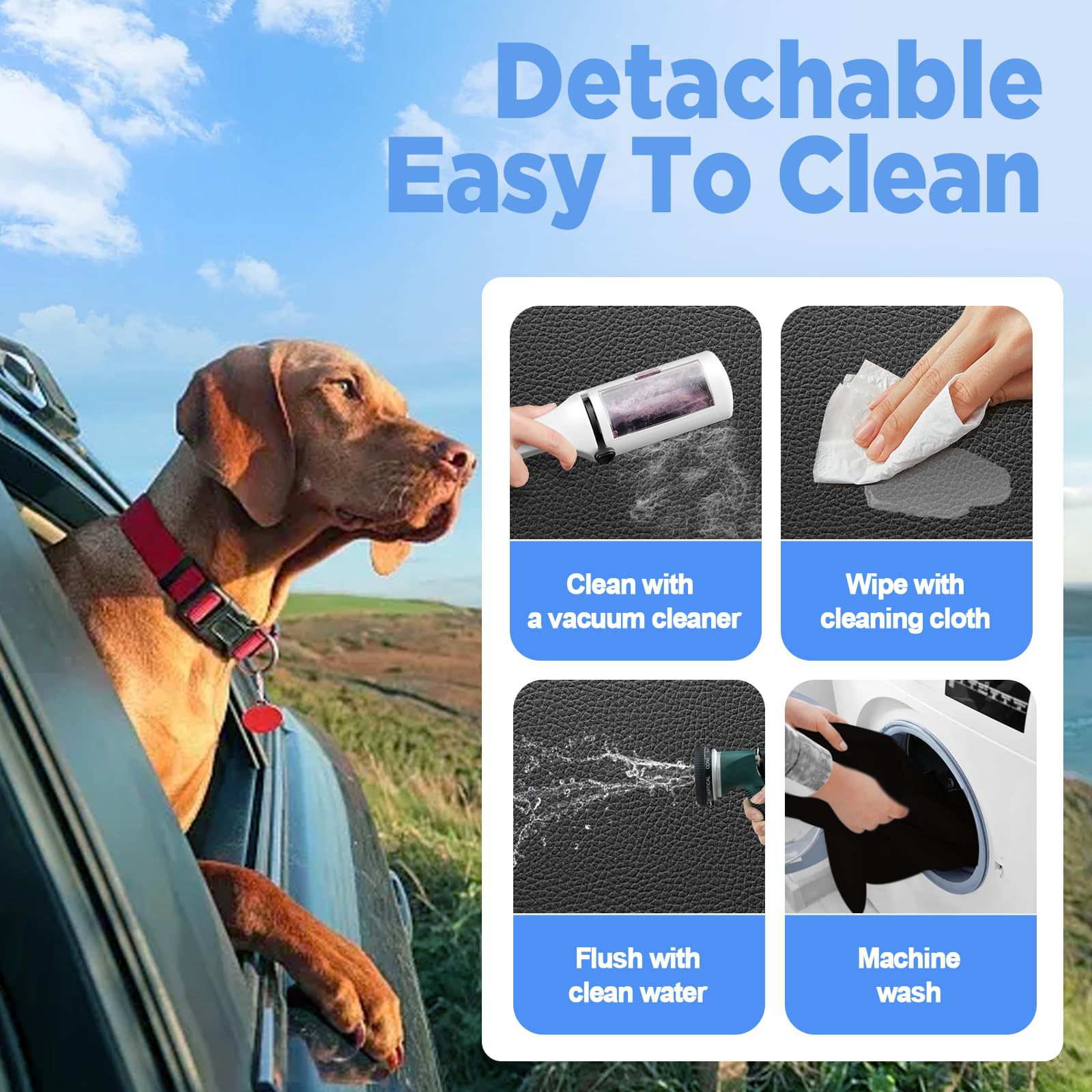
Waterproof Car Seat Cover for Pets
Real supplier stock — ships in 8–15 days
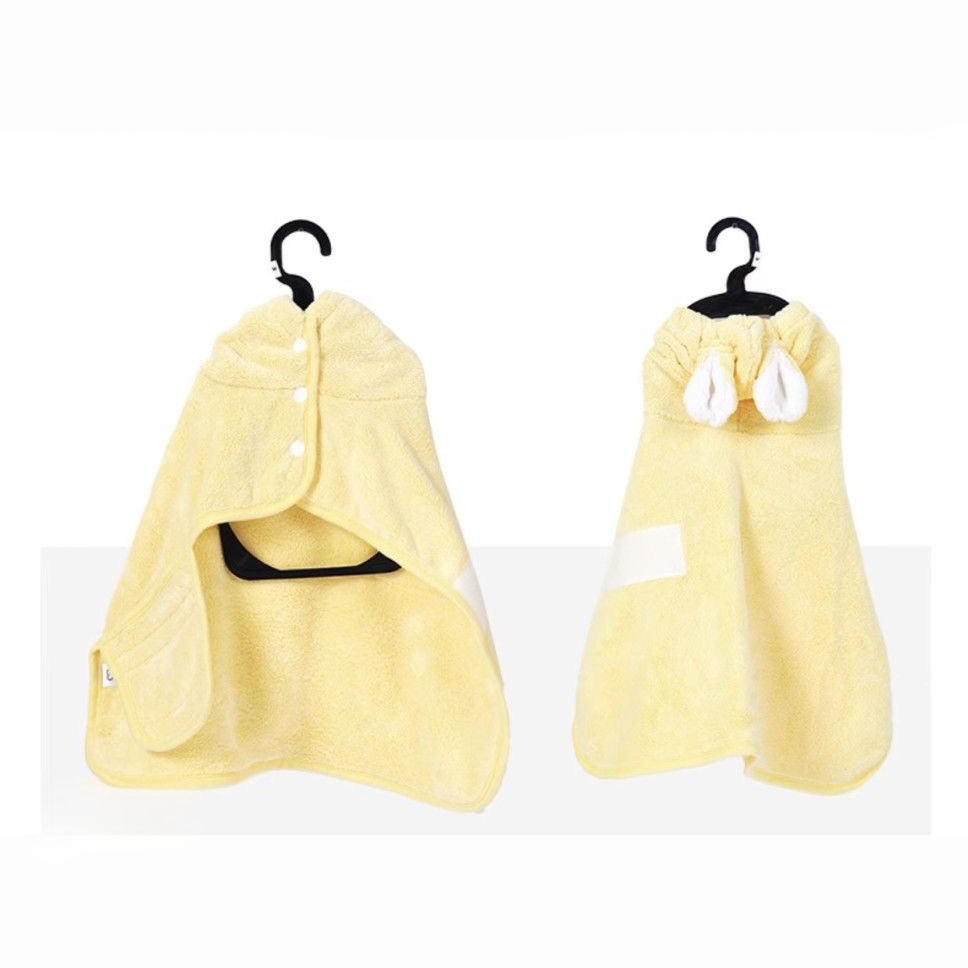
Super-Absorbent Dog Bathrobe Towel
Real supplier stock — ships in 8–15 days
Small dogs, old dogs: stop the jumping
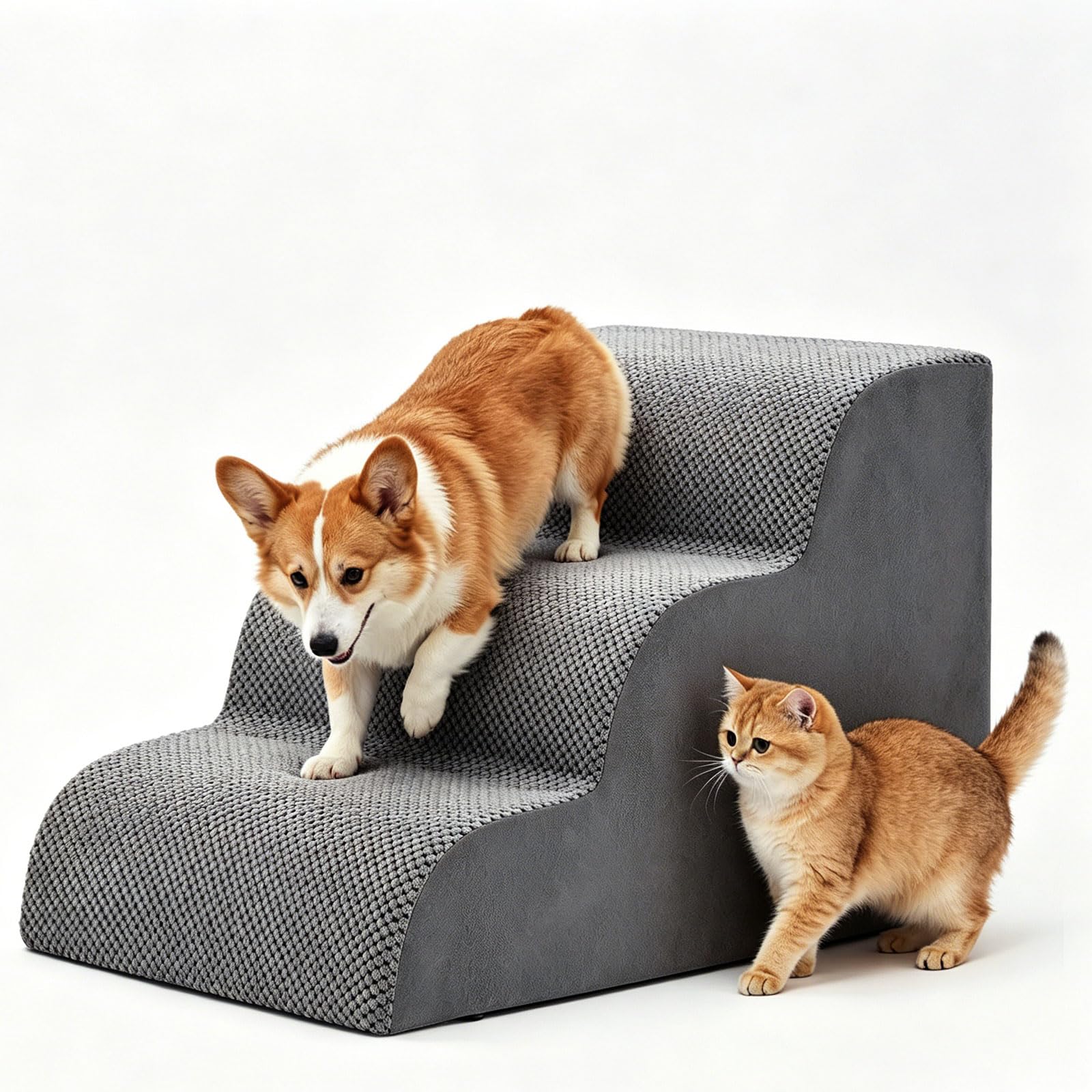
Jumping in and out of a boot looks athletic, but for small breeds, puppies and seniors it's a joint tax collected twice per trip. Repeated jumps onto hard ground are associated with joint strain, and for dogs already showing stiffness the leap becomes a reason to resist the car altogether. A set of dog stairs or a ramp removes the impact entirely — the 3-Step Dog Stairs work for car sills, couches and beds alike. Teach it with treats on each step, keep it stable against the sill, and most dogs use it happily within a week. Persistent reluctance to jump is worth a vet check; it's often the first visible sign of joint pain.
Long trips: water, breaks and motion sickness
Plan a stop every two hours or so: water, a short sniff-walk, a toilet break. A travel feeder that unfolds flat means water is always available at stops without packing bowls — the Travel Pet Feeder lives in the glovebox between trips. For motion sickness: travel on a light stomach (feed a few hours before departure, not right before), keep the car cool and ventilated, and build up with short, positive trips that end somewhere fun rather than only at the vet. Never leave a dog in a parked car in warm weather — interior temperatures climb to dangerous levels within minutes, even with windows cracked. Persistent travel sickness is worth discussing with your vet; this guide is general advice, not a medical one.
FAQ
Does my dog legally need a seatbelt in the car?
In most EU countries a dog counts as a load that must be secured — an unrestrained dog can mean a fine and insurance trouble after an accident. A crash-tested harness on the seatbelt, an anchored crate, or a partitioned boot all satisfy the rule.
How do I stop my dog getting car sick?
Travel on a light stomach, keep the car cool, and desensitise with short trips that end somewhere fun. Many dogs outgrow motion sickness that started as puppies. If it persists, your vet has effective options.
Are dog stairs worth it for a small dog?
Yes — repeated jumps from car sills, couches and beds load small joints heavily, and stairs remove that impact entirely. They matter most for puppies, small breeds and seniors, and a reluctance to jump is itself worth a vet check.
How often should I stop on a long drive with a dog?
Roughly every two hours: water, a short walk and a toilet break. Keep water accessible at every stop and never leave the dog in a parked car in warm weather — temperatures rise dangerously within minutes.